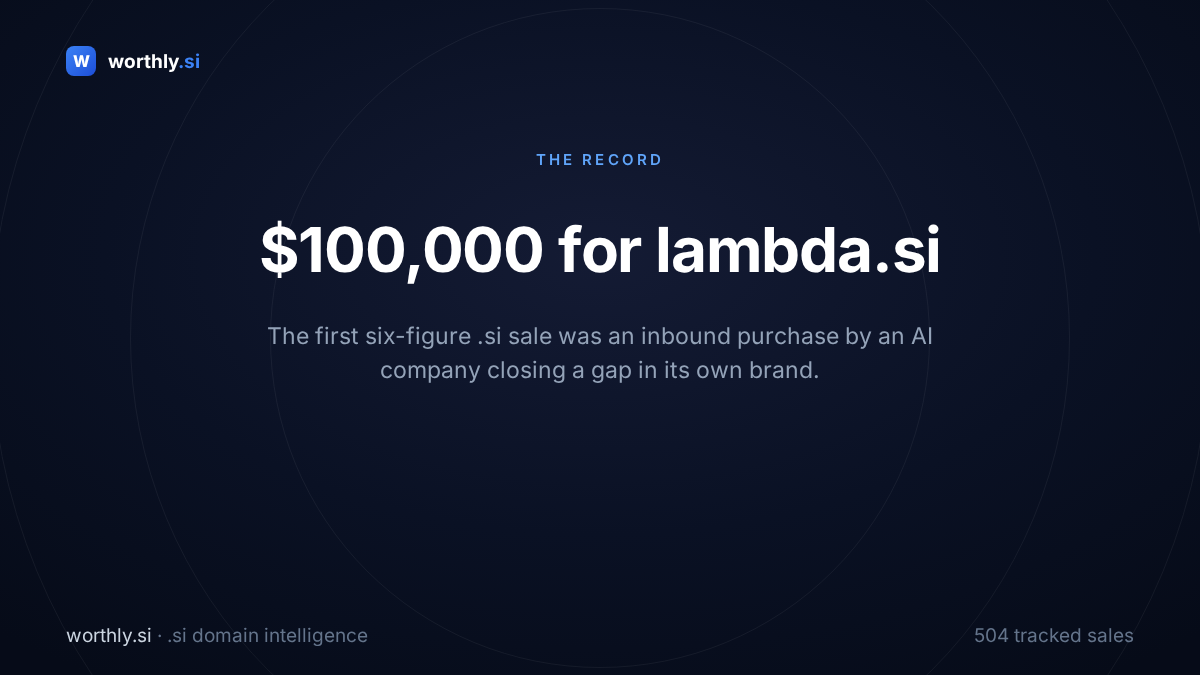
The median .si sale in our tracker is $1,499. The average is $4,022. Both are gross figures, and a portfolio that prices against them without counting what holding costs will look profitable while quietly losing money.
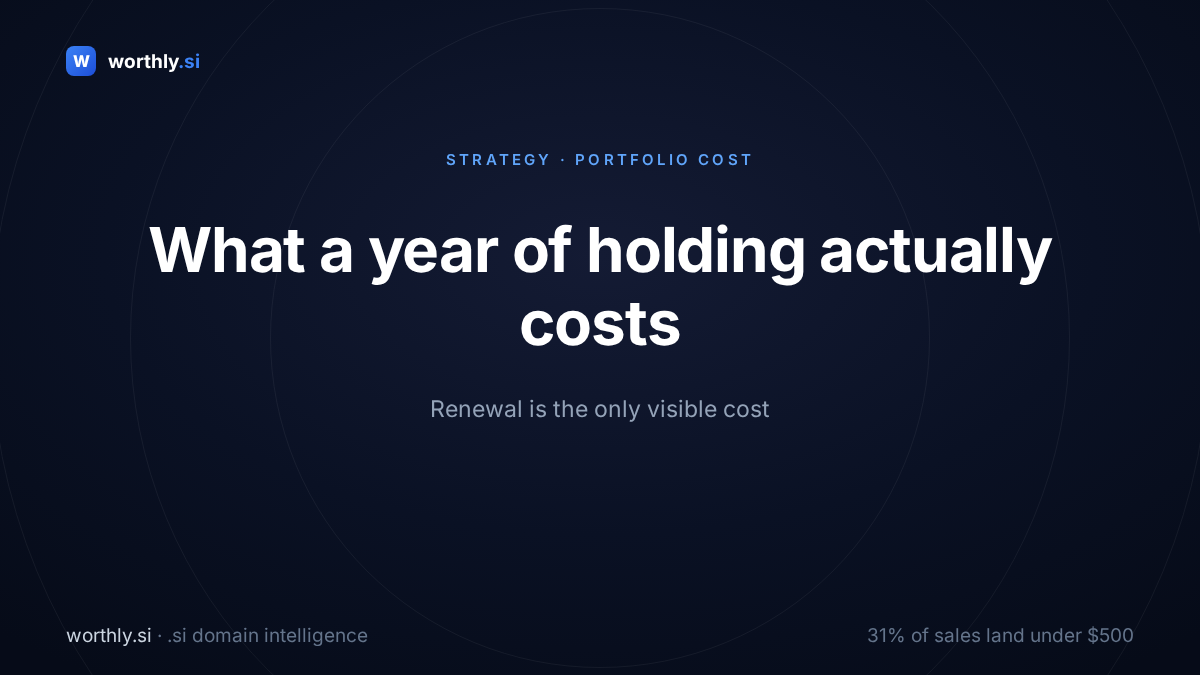
What a year of holding actually costs
Four costs, only one of which appears on a statement:
- Renewal. Paid whether or not anyone looks at the name. Small per name, large across a portfolio, and certain.
- Platform fees. Listing on a marketplace, a featured slot, a broker's commission on a sale. These scale with ambition, not with revenue.
- Time. Every appraisal, description, cover image and listing refresh is an hour that was not spent on a name that sells. At portfolio scale this is the largest hidden cost.
- Locked capital. The purchase price sitting still instead of funding another acquisition.
Only the first is visible. The other three decide whether a portfolio compounds or slowly turns into storage.
The maths that changes behaviour
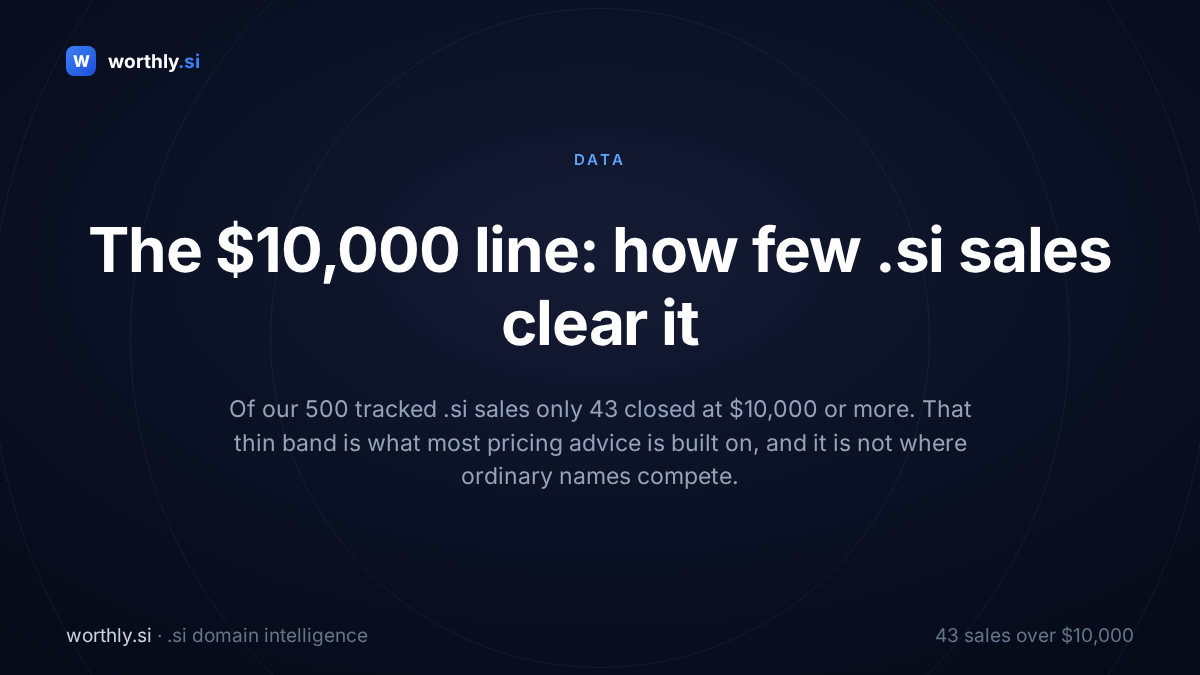
Take a name bought for $300, renewed at roughly $15 a year, priced at $2,500. After twelve months without an enquiry, the name has cost $315 plus an afternoon of listing work, and the $300 has earned nothing. Meanwhile the 43 sales above $10,000 in our sample were all names that cleared the top band on the first or second enquiry.
Now compare the alternative: sell that same name at $600 after three months and redeploy the $600 into two names that clear the middle band faster. Two chances at a $1,500 sale beat one chance at a $2,500 sale that requires a buyer who may not exist.
This is why the sub-$500 band holds 31% of tracked sales. It is not a failure market — it is where portfolios recycle their weakest holdings into working capital.
The 59-sale gap nobody prices into
Our distribution has only 59 sales between $500 and $1,000 in the entire sample. Names in that stretch sit between two buyer types: too expensive for resellers, not convincing enough for founders. Every month spent there is a month of full holding cost with the thinnest demand in the market.
If a name has no enquiries at that price, the move is usually not a small discount — it is a decision to drop into the floor where resellers shop, or to find the specific reason that lifts it into the middle band.
Set a horizon at purchase
The rule that keeps a portfolio healthy is boring: every name gets a holding horizon on the day it is bought.
- Ninety-day names: priced at the bottom of their band, sold for speed, capital recycled.
- Twelve-month names: one-word categories, industry words, names with a company already circling. Priced higher and renewed deliberately.
- No horizon: the default state of a name nobody decided about — the state that costs the most.
Names without a horizon drift upward in price and downward in attention. They renew by habit, and the portfolio eventually consists mostly of names nobody chose to keep.
Measure the real yield
At the end of the year, subtract renewals and fees from realised sales, divide by the number of names held, and you have your portfolio's actual yield. It will be lower than the sum of your asking prices, and it is the only number that tells you whether the next name is worth buying.
Ours is public because it changes what we buy. A portfolio whose median sale is $1,499 cannot afford to hold names that have never had an enquiry at $2,500 — and once that is written down, the decision about which names to keep becomes obvious rather than emotional.
The objection: what if the right buyer is just late?
Sometimes they are. A one-word category name can wait two years and then sell for five figures to a company that finally decided to rebrand. That is a real strategy, and it works — but only when it is chosen, priced for, and limited to the handful of names that deserve it.
The mistake is applying that patience to a portfolio of thirty compound brandables. Patience is a position, not a policy. Decide which names have earned it, and let the rest go at the price the market is actually paying.
What to do this week
List every name you hold with its purchase price, its renewal date, and the number of enquiries it has had in twelve months. Names with zero enquiries and a horizon that expired are candidates for the floor price today, not next year. Names with enquiries are worth a deliberate raise.
That single spreadsheet changes more portfolio outcomes than any pricing article, including this one.
Check a name while you are here.
Registry-accurate availability and a value range that shows its comparables — free, no account.