When a serious buyer replies to a listing, the decision is already half made. What follows is verification. It moves in a predictable order, and knowing that order lets you answer questions before they are asked — which is the difference between a negotiation that takes a week and one that takes a quarter.
1. How many extensions carry the same string
This is the fastest read on whether the word has demand independent of your opinion. A string registered across thirty TLDs is contested globally: somebody in several countries has agreed it is worth renewing every year. A string registered only in .si is usually one person's idea about one market.
Neither is disqualifying. But they price differently, and a buyer who knows the number will not be talked out of it. If your name is registered in 34 extensions, say so in the listing. If it is registered in one, lead with the category it serves instead and let the price reflect it.
2. Is there a trademark in the buyer's category
Not a trademark anywhere in the world — every name collides with something somewhere. The question is whether there is a live mark in the market the buyer sells into. A name contested in software and clean in construction is a construction brand, and that is a perfectly good answer.
Buyers with legal teams will find the conflict themselves. Surfacing it first changes the conversation from defending a problem into framing a category. Hiding it changes a completed sale into a refund dispute three weeks later.
3. Can they dictate the name to a customer
One test settles this: say the name out loud to someone who cannot see it. If they ask you to spell it, the buyer pictures that conversation happening weekly for years. Hyphens, invented spellings, doubled letters and ambiguous vowels all fail here, and design work cannot rescue a name that fails on a phone call.
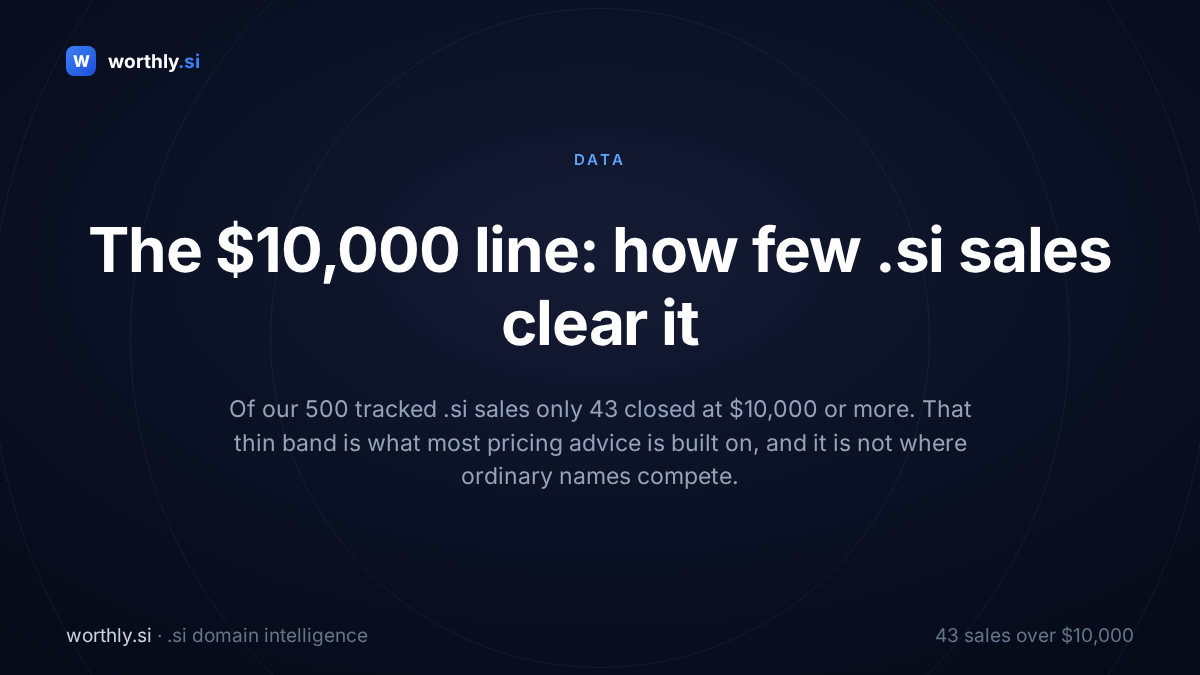
This is also why so many sales cluster between $1,000 and $4,999. A clean, pronounceable four-to-eight-letter brand clears this check for every buyer, so it competes on price rather than on risk.
4. Is the transfer path clean
Registry-side transfers for .si are routine when the name sits at a registrar that participates in the transition and the seller can prove control. They become complicated when the name requires an unusual registrar, a manual auth code, or a broker to move at all.
Buyers discount for that risk in advance, and they are right to. A name that might stall for three weeks is worth less today than the same name with a documented transfer, even though nothing about the string changed.
5. Who else is asking
This is not a bluff; it is an observation buyers make from the outside. They watch whether the price has changed, whether the name is listed on a marketplace, whether the owner answers enquiries quickly, and whether anyone else has been in touch. Evidence of attention is the only signal that moves a four-figure name into five figures.
A name nobody asks about is priced by the market, not by the seller. That is not a reason to invent demand, it is a reason to publish everywhere and answer fast.
The order matters
Extensions and trademark come first because either one can end the deal outright. Spelling and transfer come next because they cost money to fix or discount. Attention comes last because it only sets the position within a band that the first four checks already established.
Answer all five before they are asked and the negotiation stops being about whether the name is worth anything. It becomes a conversation about timing, payment rail, and who signs first.
What this looks like in a listing
A listing that survives all five checks is short and factual: the name, the extensions count, the clear category, the registrar, and one sentence about who would want it. No adjectives, no appraisal screenshot, no story about the night you bought it. Buyers treat a short verifiable listing as a confident one.
None of these five checks requires a paid appraisal. They require ten minutes and a registry lookup — which is exactly why buyers trust them more than any number printed on a page, including ours.
The cost of skipping one
Sellers usually skip the second check, the trademark, because it is the one that can kill a sale they have already priced in their head. That is precisely why it comes back later, in the form of a buyer going quiet after two enthusiastic emails, or a broker asking a question you do not want to answer.
Run the five in order on your own portfolio this week. The names that fail the first four are the ones where a discount is cheaper than another year of renewal — and the names that pass all five are the ones worth raising, not cutting.
Check a name while you are here.
Registry-accurate availability and a value range that shows its comparables — free, no account.